
Weight-Gain Essentials
Calorie-dense Nigerian whole foods for lean mass, glycogen refueling and tissue repair
Clinical Abstract & Rationale
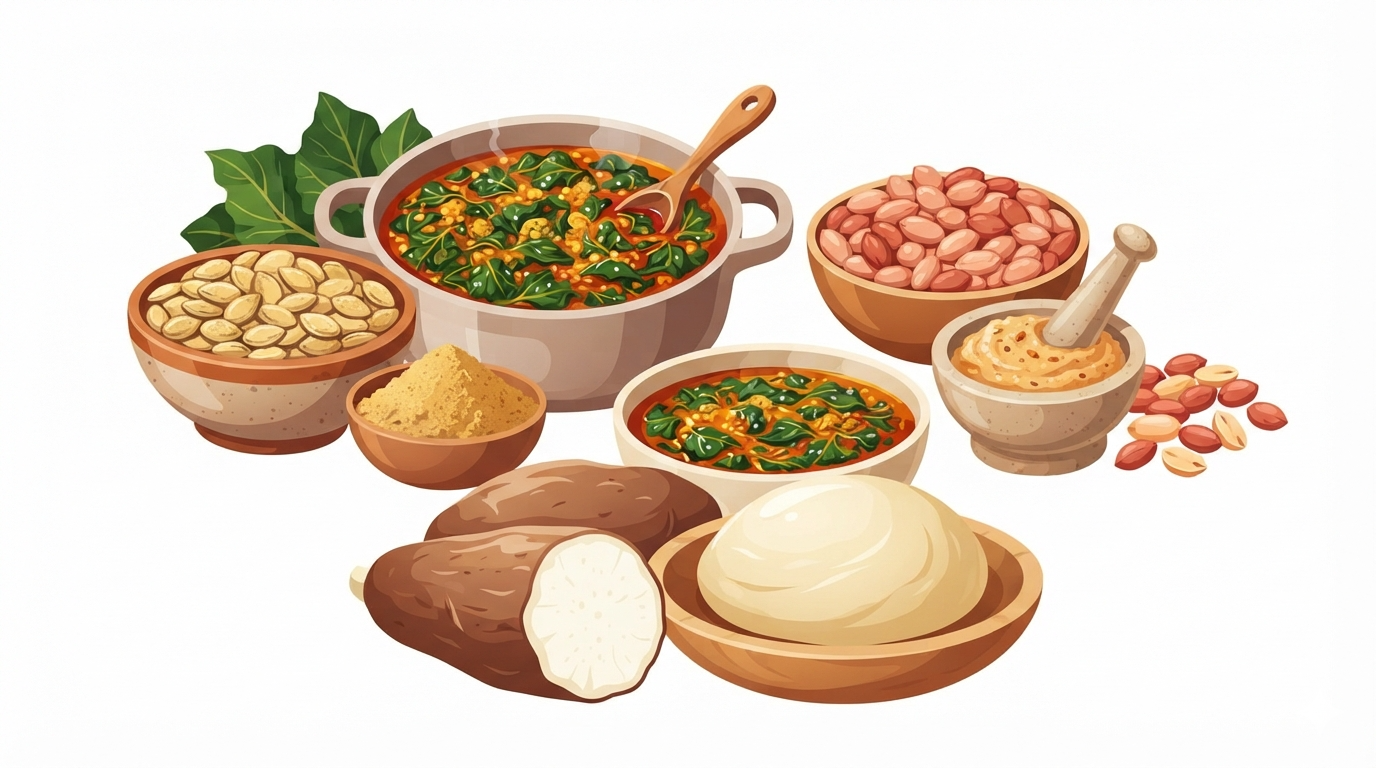
A whole-food weight-gain plate built on egusi, groundnuts and white yam — calorie-dense protein, healthy fats and premium carbohydrates that support lean tissue rather than empty calories.
Weight gain that lasts is tissue building, not simply eating more. A useful surplus combines three things at every meal: enough total energy, a dependable protein supply, and the minerals and vitamins that let the body actually use that protein. The Nigerian staples below deliver all three without relying on processed mass-gain powders.
Egusi (Melon Seeds) — The Anabolic Catalyst
Nourishment. Calorie-dense protein and healthy fats. One ounce delivers 15% RDA magnesium and 10% RDA zinc for optimal tissue repair.
Cautions. Highly caloric; monitor portions to ensure lean mass gain over excess fat storage.
Preparation. Grind and simmer into a rich, Ugu (fluted pumpkin)-packed soup with a dash of palm oil for maximum anabolic surplus.
Groundnuts (Peanuts) — The Protein Powerhouse
Nourishment. Plant-based energy density. One ounce provides 20% RDA niacin (B3) and 10% RDA vitamin E for cellular protection.
Cautions. Aflatoxin risk if poorly stored; always source from reputable, dry local markets.
Preparation. Blend into a creamy, natural paste (Ose Oji) or lightly roast as a high-energy, on-the-go recovery snack.
White Yam (Isu) — The Glycogen Architect
Nourishment. Premium complex carbohydrates. One cup cooked yields 25% RDA vitamin C and 15% RDA potassium for peak muscle function.
Cautions. High glycemic load; always pair with proteins and fats to stabilise blood sugar spikes.
Preparation. Pound into smooth, elastic pounded yam, served with a robust, protein-rich egusi or ogbono draw soup.
Building the plate
- Main meal. A bowl of egusi or ogbono soup with two wraps of pounded yam covers protein, fat and carbohydrate in one sitting.
- Between meals. Two tablespoons of Ose Oji groundnut paste, or a small handful of roasted groundnuts, adds calories without a heavy meal.
- Rotate the protein. Egusi and groundnuts are plant sources; alternate with fish, eggs, beans or meat so the essential amino acid profile stays complete.
- Track the trend, not the day. Weigh in weekly and watch strength and waist measurements together — a slow climb in body weight with a stable waist is the signal that the surplus is going to lean tissue.
- Increase gradually. Raise portions every one to two weeks rather than jumping straight to a very high intake, and keep water intake up as fibre and calories rise.
Food-first weight gain still needs medical context. If you have diabetes, kidney disease, a nut allergy, or an unexplained drop in weight, plan the approach with your clinician before scaling up.
Pharmacological Mechanism of Action
Sustained lean-mass gain needs a modest calorie surplus, complete amino acid availability and enough micronutrients to run tissue repair. Egusi contributes protein and healthy fats alongside magnesium and zinc, cofactors for protein synthesis and tissue healing. Groundnuts add energy-dense plant protein, niacin and vitamin E for cellular protection, while white yam supplies complex carbohydrate that refills muscle glycogen and potassium for contractile function. Serving the carbohydrate load with protein and fat blunts the glycemic spike and steers the surplus toward lean tissue instead of fat storage.
Botanical Ingredients & Synergists Matrix
Every botanical component is chosen for specific phytoconstituents and biochemical co-factor compatibility.
Egusi (Melon Seeds)
Citrullus lanatus
Groundnuts (Peanuts)
Arachis hypogaea
White Yam (Isu)
Dioscorea rotundata
Master Apothecary Preparation Guide
Follow these sequential extraction instructions to protect delicate volatile terpenes and maximize bio-assimilation.
Chronobiology & Administration Schedule
Safety Profile & Contraindications
Egusi is highly caloric — monitor portions so the surplus builds lean mass rather than excess fat.
Groundnuts carry an aflatoxin risk if poorly stored; source from reputable, dry markets and discard musty or mouldy nuts.
White yam has a high glycemic load; always pair it with protein and fat to stabilise blood-sugar spikes.
Groundnut allergy is common — avoid peanuts entirely if you react to them.
If you have diabetes, kidney disease or another condition that needs medical nutrition therapy, plan the surplus with your clinician.
Frequently Asked Questions
Is egusi a complete protein on its own?
No single seed covers every essential amino acid. Egusi contributes protein and fat, but the plate should include a complementary protein source so the full amino acid profile is covered.
Can I gain weight without groundnuts?
Yes. Groundnuts are convenient calorie-dense protein, but other nuts, seeds and healthy oils can supply similar energy density if you need to avoid peanuts.
Why pair pounded yam with soup instead of eating it alone?
White yam has a high glycemic load. Pairing it with the protein and fat in egusi or ogbono slows digestion and keeps blood sugar steadier.
Need a personalized protocol tailored to your biomarkers?
Connect directly with clinical phytotherapists to formulate custom remedies, coordinate drug-herb compatibility, and monitor your long-term vitality.
Related Protocols
View All Articles
GABAergic Nervine & Deep Sleep Protocol
A restorative evening infusion harnessing passionflower, lemon balm, and chamomile to soothe an overstimulated central nervous system, quiet mental loops, and lengthen regenerative slow-wave sleep phases.

Golden Rhizome Joint & Anti-Inflammatory Protocol
A time-honored Ayurvedic preparation engineered for maximum lipid-bound bioavailability to support flexible joints, reduced morning stiffness, and oxidative defense.

Holy Basil & Ashwagandha HPA-Axis Tone Protocol
A balancing protocol formulated to recalibrate the Hypothalamic-Pituitary-Adrenal (HPA) axis, stabilizing morning waking energy without reliance on nervous caffeine spikes.